24 Jun 2026
SEBI Registered Name - Kotak Mahindra Mutual Fund
SEBI Registered Number - MF/038/98/1
Biotechnology is no longer a niche scientific discipline, it is a powerful engine driving global innovation, economic growth, and societal transformation. From life-saving therapies to sustainable energy solutions, biotechnology sits at the intersection of science, industry, and policy. As the world grapples with challenges such as healthcare access, food security, and climate change, biotech is emerging as one of the most critical sectors of the 21st century.
This blog explores the global biotechnology landscape, key growth drivers, innovation trends, and India’s remarkable rise as a bioeconomy powerhouse.
Understanding Biotechnology: Scope and Impact
At its core, biotechnology harnesses biological systems and organisms to develop products and technologies that improve human life and environmental sustainability. Its applications cut across multiple sectors:
- Healthcare: Biologics, gene therapies, vaccines, and diagnostics
- Agriculture: Genetically modified (GM) crops and crop protection
- Industrial Biotechnology: Biofuels, enzymes, and biomanufacturing
Modern biotech leverages advanced technologies such as genetic engineering, CRISPR, and synthetic biology to address global challenges. These innovations are not only improving healthcare outcomes but also enabling cleaner industrial processes and more resilient agricultural systems.
Economically, biotechnology is on a strong growth trajectory, with global projections indicating 8–10% CAGR, driven by rising investments in research and development (R&D), increasing demand for biologics, and rapid technological advancements.
The Global Biotechnology Landscape
Growth Rate Of Global Pharma Market By Company Type
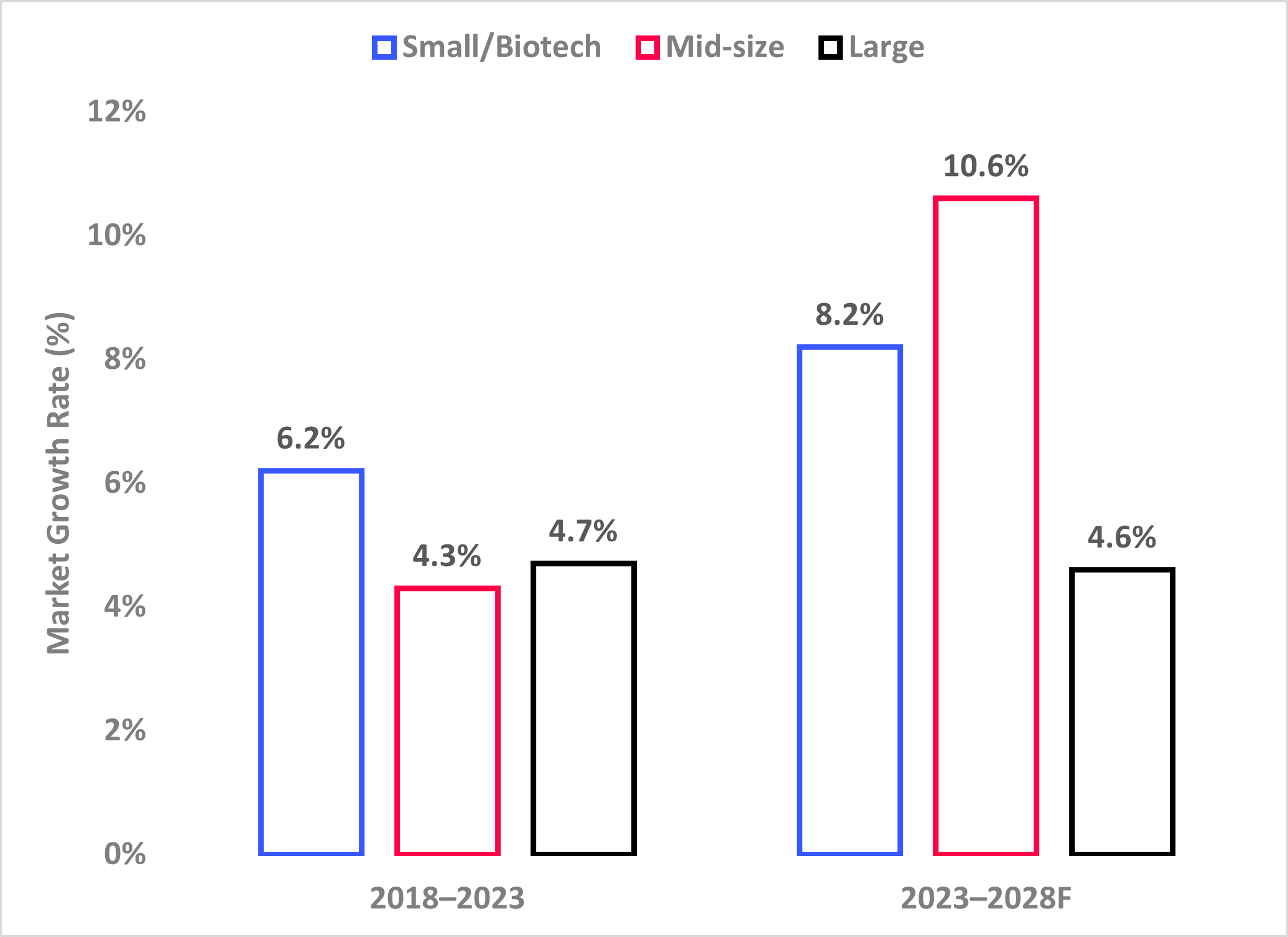
Source : EvaluatePharma (World Preview 2028, Outlook to 2028); Frost & Sullivan
An Expanding Pharma Ecosystem
The pharmaceutical and biotech industries are becoming increasingly interconnected. Between 2018 and 2028 (forecast), the biotech segment is expected to witness faster growth compared to traditional large pharmaceutical companies
Small and mid-sized biotech firms are playing a pivotal role in innovation, particularly through breakthroughs in gene therapy, immunotherapy, and precision medicine. These firms are often more agile and research-focused, driving the early stages of drug discovery and innovation.
R&D and Innovation Acceleration
Innovation intensity in biotechnology has surged over the last decade. Global biotech patent filings have increased nearly 10x, reflecting a sharp rise in intellectual property creation and technological advancement.
This surge in patents indicates:
- Strong scientific progress
- High levels of private and public investment
- Increasing commercialization potential
Funding Trends: From Boom to Normalization
Biotech funding experienced a dramatic surge during the COVID-19 pandemic, peaking in 2021. However, post-pandemic, investment levels have normalized.
Key takeaways:
- Pandemic period drove unprecedented capital inflows
- Post-2021 period reflects more selective and disciplined funding
- Investors are increasingly focused on scalable and commercially viable innovations
This normalization signals a maturing market rather than a decline, with capital being allocated more efficiently.
Where Does the Money Flow? Key Investment Areas
Biotechnology funding is concentrated in a few high-impact domains:
| DOMAIN | FUNDING DISTRIBUTION | AREA |
|---|---|---|
| Genetic Engineering | ~33% | Driven by CRISPR and gene-editing technologies |
| Bioprocessing | ~27% | Critical for scaling biologics production |
| Cell Therapy | ~20% | Including CAR-T and regenerative medicine |
| Diagnostics and Others | ~20% | Supporting precision medicine and early detection |
Biotechnology Research Areas Funding Distribution
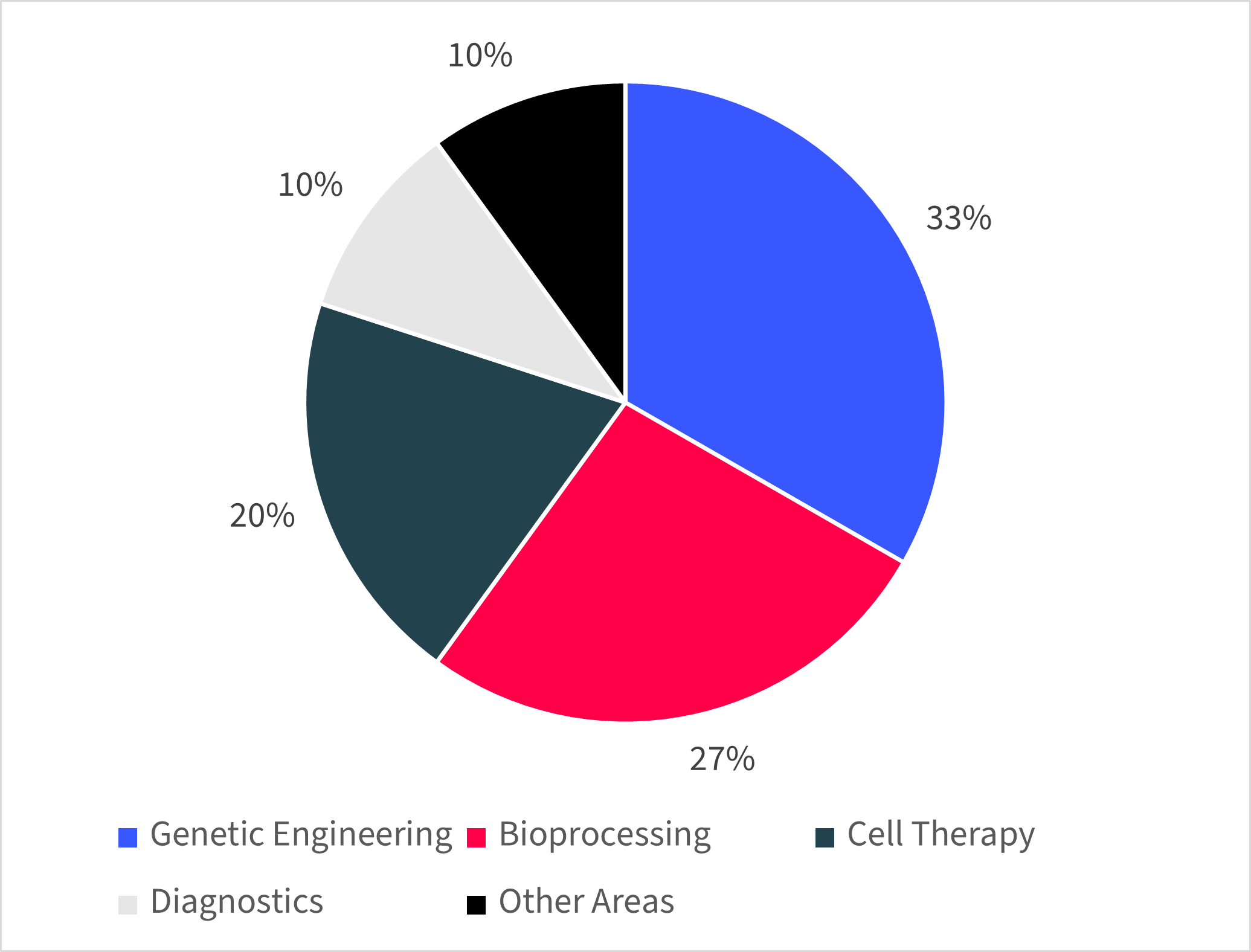
Source: Omega Consulting, Data as of FY 2025
These funding patterns highlight a clear trend: innovation is moving from discovery to scalable commercialization.
The Evolution of Biotech Applications
Biotechnology adoption is unfolding in phases across industries:
Short Term (2020–2030)
- CAR-T therapies for cancers
- Liquid biopsies
- Plant-based proteins
Medium Term (2030–2040)
- Cultured meat
- Engineered organisms
- Biosensors for health monitoring
Long Term (Beyond 2040)
- Lab-grown organs
- Embryo editing
- Bio-batteries and biosolar systems
This phased evolution reflects how advancements in science, regulation, and infrastructure gradually unlock new value pools
Global Leadership in Biotechnology
The biotechnology industry is geographically concentrated in major innovation hubs:
- United States: Global leader in R&D output and patents
- China: Rapidly growing innovation ecosystem
- Europe (UK, S. Korea, Switzerland): Strong regulatory frameworks and research institutions
Top 5 R&D Engines
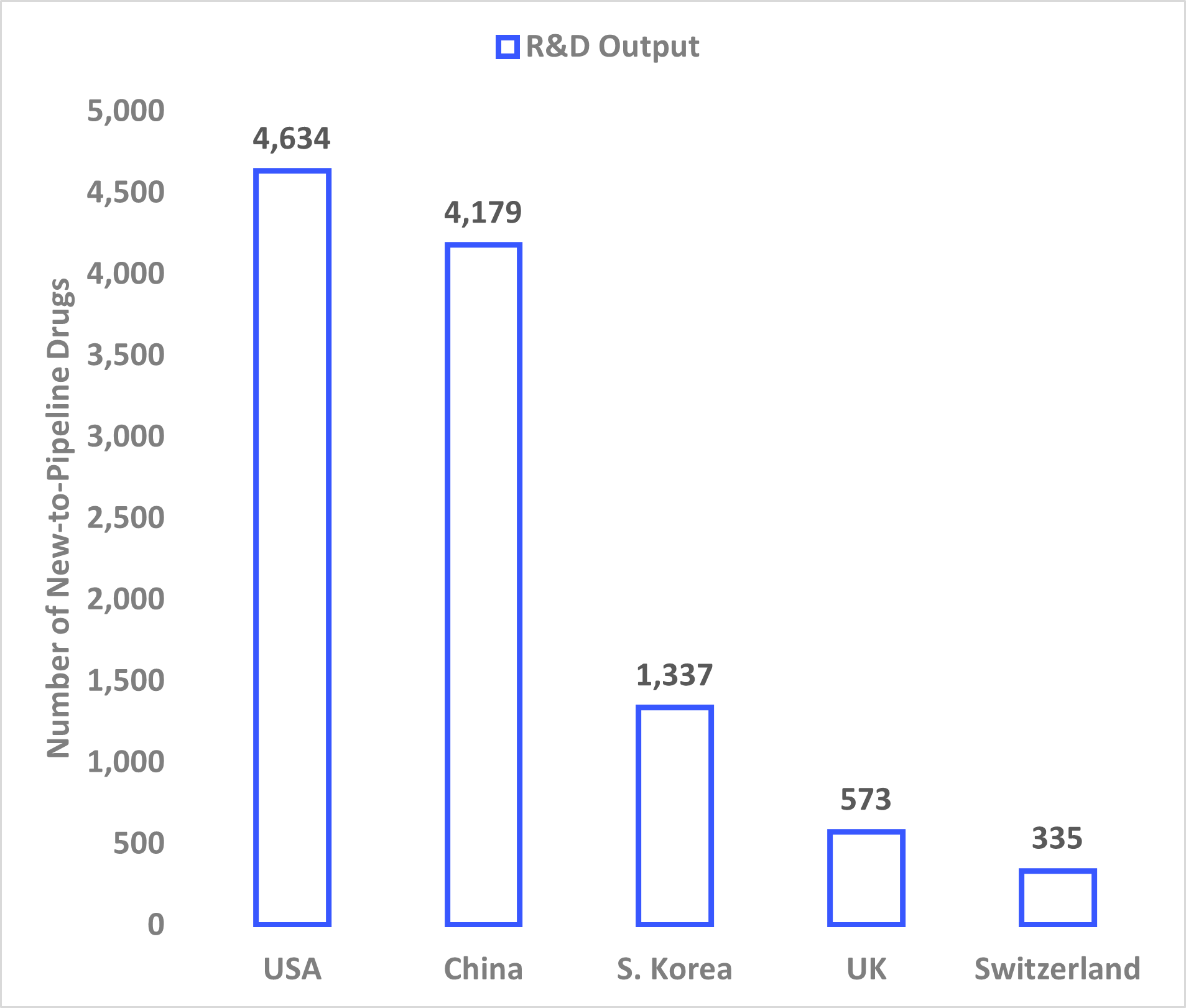
Source: Omega Consulting, Data as of FY 2025
These countries benefit from:
- Deep funding pools
- Advanced research infrastructure
- Strong intellectual property systems
China, in particular, has been gaining significant ground, increasing its share of biotech R&D output over the past decade.
Growth In Biotech Patents Filed
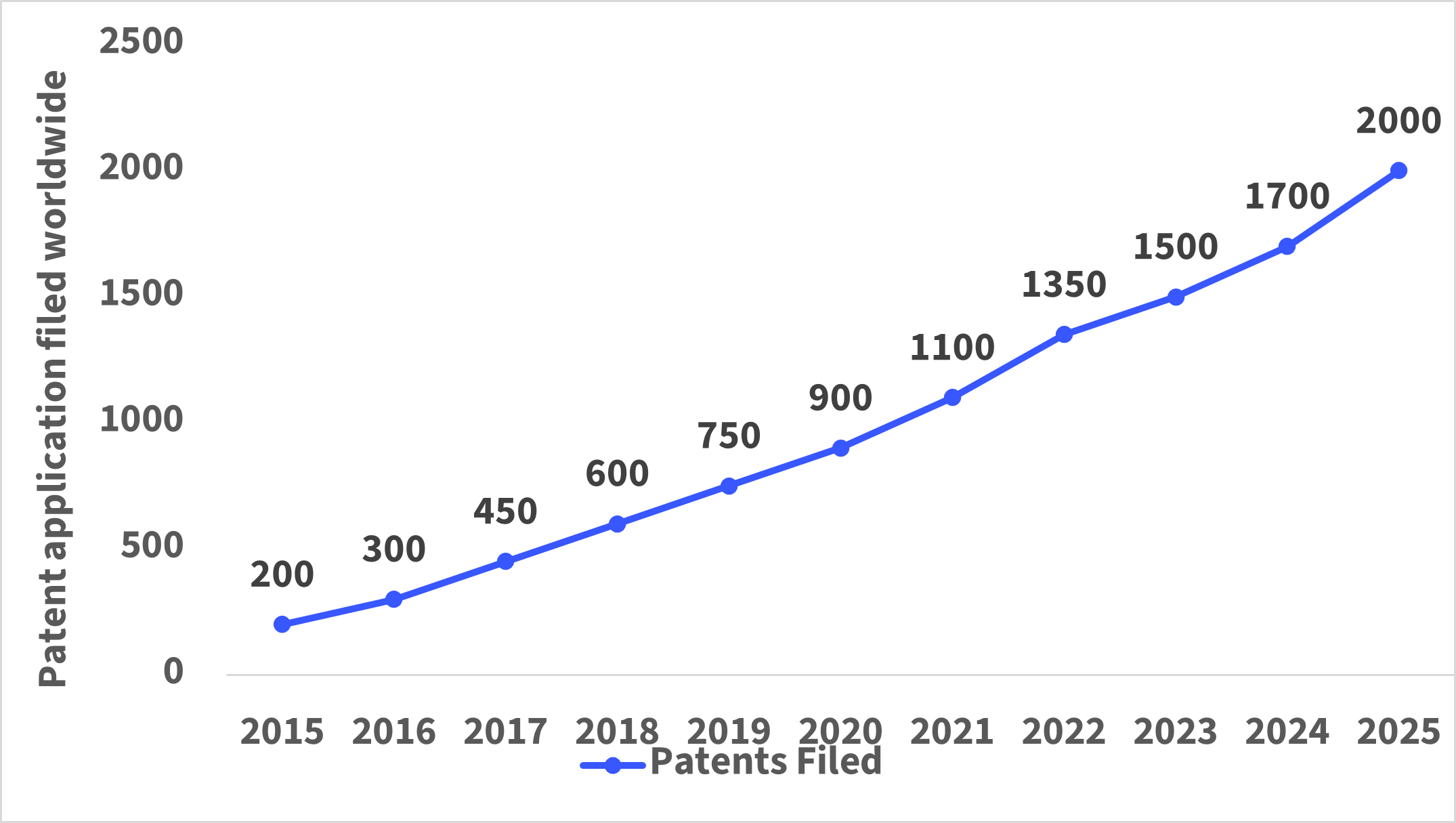
Source : Omega Consulting, Data as of FY 2025.
The Four Pillars of Modern Biotechnology
Modern biotech can be understood through four foundational pillars:
| PILLAR | CONSTITUENTS |
|---|---|
| BIOMOLECULES | DNA, RNA, proteins, and gene editing |
| BIOSYSTEMS | Cells, tissues, and organ engineering |
| BIOMACHINE INTERFACES | Neurotechnology and bioelectronics |
| BIOCOMPUTING | Biological data storage and computation |
These pillars represent the convergence of biology with engineering, computing, and data science—unlocking entirely new possibilities for innovation
India’s Biotechnology Revolution
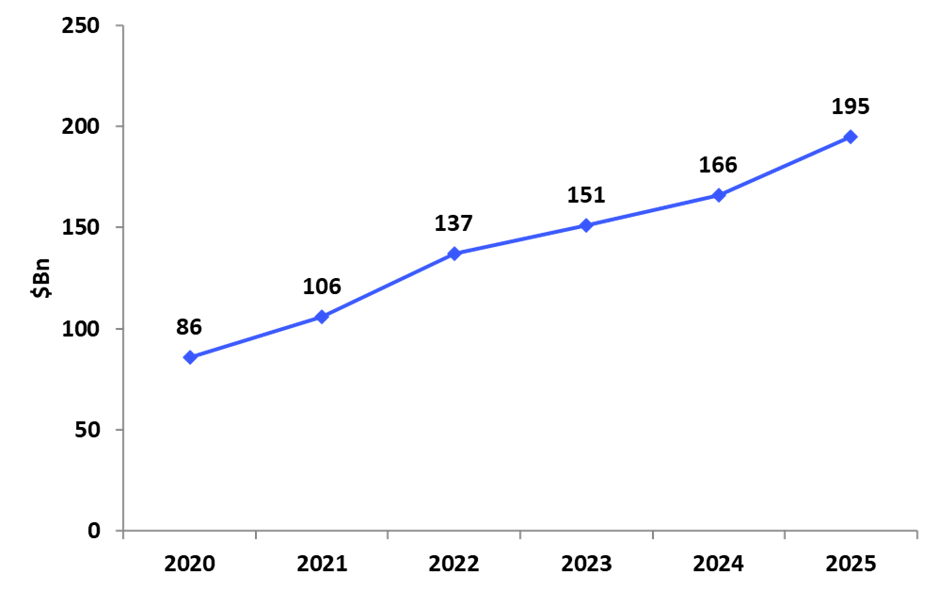
India has emerged as one of the fastest-growing biotech markets globally, transitioning from a services-driven model to an innovation-led ecosystem.
Growth In Bioeconomy Value In India
Source: India Bioeconomy Report 2026
The Rise of India’s Bioeconomy
India’s bioeconomy has witnessed remarkable growth:
| PARAMETER | FIGURE |
|---|---|
| Value (2025) | $195.3 billion |
| Annual Growth (2024–25) | 18% |
| CAGR (2020–25) | 17.8% |
| GDP Contribution | 4.8% |
| Startups | 11,800+ |
This rapid expansion reflects increasing investments, strong policy support, and a thriving startup ecosystem.
Engines of Growth in India
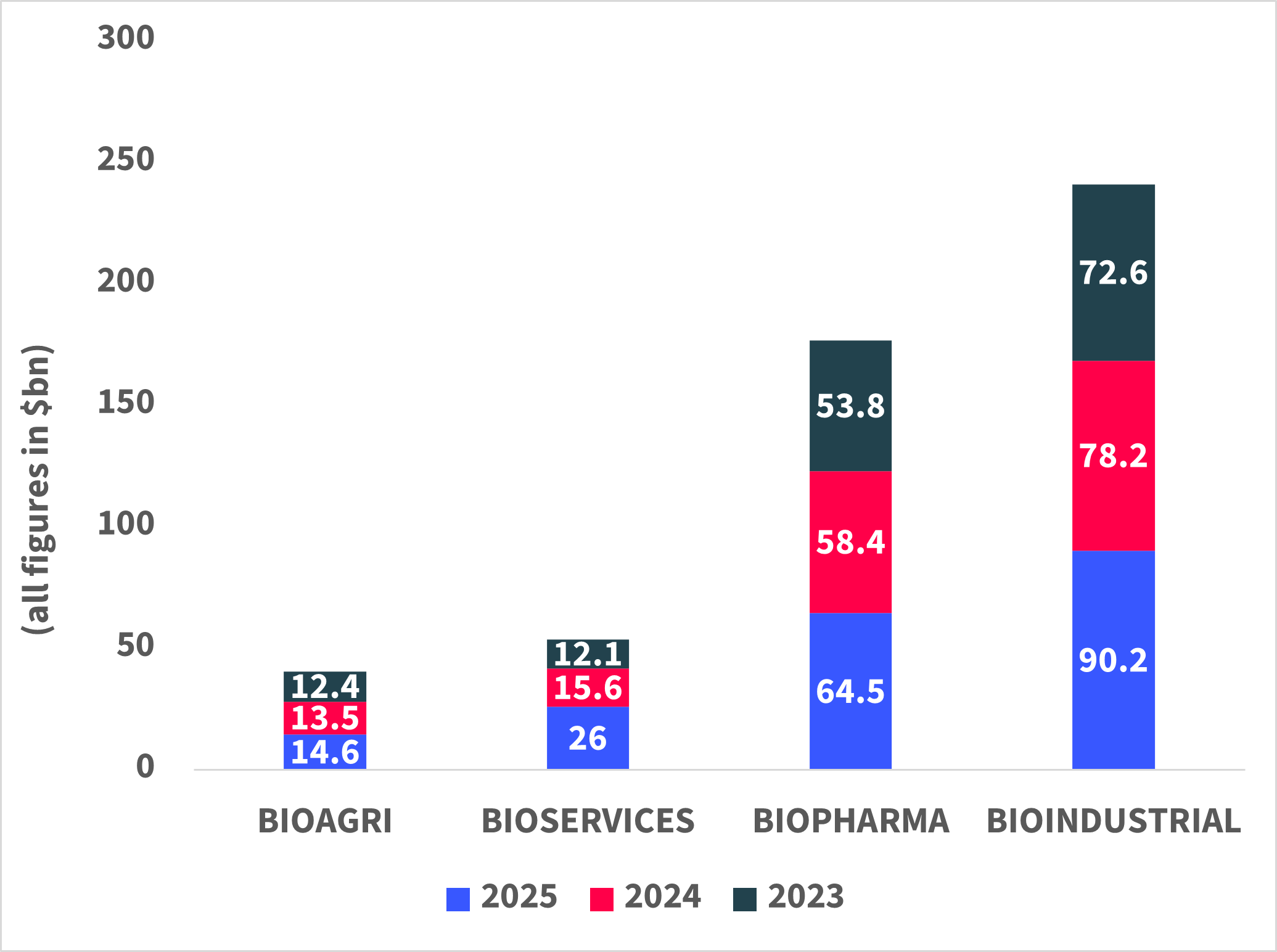
India’s bioeconomy is diversified across four key segments:
1. Bioindustrial (Largest Segment)
- Driven by biofuels, enzymes, and industrial applications
- Strong alignment with energy transition goals
2. Biopharma
- Focus on vaccines, biosimilars, and therapeutics
- Major contributor to exports
3. Bioservices
- Contract research, clinical trials, and data platforms
- Leveraging India’s talent advantage
4. Bioagri
- GM crops and biological inputs
- Supporting agricultural productivity
This balanced mix creates resilience and multiple avenues for value creation
SEGMENT WISE GROWTH OF BIOTECH IN INDIA
Source: India Bioeconomy Report 2026
Policy Support and Government Initiatives
India’s biotech growth is strongly supported by policy initiatives:
| Policy Initiative | Lead Institution | Objective |
|---|---|---|
| RDI Fund (~₹1 lakh crore) | DST / ANRF | Catalyze deep-tech R&D and innovation |
| BIRAC RDI Implementation | BIRAC | Channel funding for biotech startups |
| BioPharma SHAKTI | Govt. of India | Strengthening biologics and manufacturing |
| GE Stacked Events Guidelines (2025) | DBT / RCGM | Biosafety framework for crops |
| Scientific Entrepreneurship | DBT / iBRIC | Commercialization of public research |
These initiatives are crucial in bridging the gap between research and commercialization.
Biofuels: A Cornerstone of India’s Bioeconomy
One of the most compelling examples of biotech-driven transformation in India is the ethanol blending program.
Key Highlights:
| PARAMETER | FIGURE |
|---|---|
| Increase in Ethanol blending | 1.5% (FY14) to 12.1% (FY23) |
| Target | 20% blending (E20) by FY26 |
| Ethanol demand Expectation | 1,350 crore litres by FY26 |
| CAGR | Up to 25% in recent years |
Impact:
- ₹35,000+ crore savings in fuel imports
- Reduced carbon emissions (3.5 MT annually)
- Increased farmer income through ethanol feedstock
This initiative highlights how biotechnology can simultaneously address energy security, environmental sustainability, and rural development.
Source: Ministry of Petroleum & Natural Gas (MoPNG), NITI Aayog, Trualt Bioenergy Ltd, ICAR, FAO · BioFrontier 2025
India as an Emerging Innovation Hub
India is increasingly becoming a global hub for biotech innovation due to:
- Cost-efficient R&D capabilities
- Strong talent pool
- Growing startup ecosystem
- Increasing global collaborations
With over 11,000 biotech startups and expanding infrastructure, India is well-positioned to play a leading role in the global biotech value chain.
Future Outlook: The Next Frontier
Biotechnology is entering a transformative phase where science is becoming scalable and commercially viable. The convergence of biology with digital technologies, AI, and advanced manufacturing is accelerating innovation cycles.
Key Trends to Watch:
- Personalized medicine and gene therapies
- Synthetic biology and bioengineering
- Sustainable biomanufacturing
- Digital biology and bioinformatics
- Climate-focused biotech solutions
The future of biotech lies in its ability to move from lab-scale discovery to industrial-scale deployment, creating massive economic and societal value.
Conclusion
Biotechnology is no longer just about scientific discovery—it is about scaling innovation to solve real-world problems. From transforming healthcare to enabling clean energy and sustainable agriculture, biotech is shaping the future of humanity.
Globally, the sector is benefiting from strong innovation, funding, and policy support. In India, the bioeconomy is rapidly expanding, supported by government initiatives, startups, and increasing commercialization.
As we move forward, biotechnology will play a defining role in building a more sustainable, resilient, and innovation-driven world. The convergence of science, technology, and policy ensures that biotech will remain at the forefront of global transformation.
SEBI Registered Name - Kotak Mahindra Mutual Fund
SEBI Registered Number - MF/038/98/1
Disclaimer
KMAMC is not guaranteeing/offering/communicating any indicative yield/returns on investments. The stocks/sectors mentioned in this slide do not constitute any recommendation and Kotak Mahindra Mutual Fund may or may not have any future position in these sectors/stocks.
Mutual Fund investments are subject to market risks, read all scheme related documents carefully.