25 May 2026
India’s consumption story is undergoing a silent but structural shift. While overall spending continues to grow, what households spend on, and who is doing the spending, has changed dramatically.
This is not just a story of rising incomes, it is a story of changing priorities, unequal growth, and diversion of household money into new channels, both productive and unproductive.
Food Is Out. Everything Else Is In
The Indian household is no longer defined by spending on food.
Over the last two decades, the share of food in total household expenditure has declined sharply, with cereals seeing the steepest fall.
What replaced it?
- Mobile phones
- Automobiles
- Rent
- Eating out
- Education
This reflects Engel’s Law in action, as incomes rise, spending shifts from staples to discretionary categories.
The thali shrank - the wallet expanded elsewhere.
The New Wallet: From Necessities to Experiences
India’s consumption mix is undergoing a clear reallocation rather than expansion — with spend shifting away from essential goods toward digital, premium and experience-led categories.
Over the past few years, new-age categories have significantly outpaced traditional consumption segments:
- Digital-first consumption (OTT, quick commerce, e-commerce) has seen 40–95% growth trajectories in key platforms
- Premium categories like smartphones and hearables are growing at ~5–50% CAGR, even as overall unit volumes remain flat
- Platform-based spending (gaming, fantasy, subscriptions) continues to scale rapidly.
In contrast, legacy consumption categories are witnessing moderate, low double-digit or even single-digit growth:
- FMCG growth remains in the ~5–10% range
- Household durables and appliances are growing steadily but without acceleration
- 2-wheelers and other mass categories have seen growth slow materially post-2019
Source: Company filings, Avendus Spark, industry reports. *Data as on FY 19-24 | As per latest available data
Consumption is moving from ownership to access, from products to platforms, and from mass to premium.
The Apple Test: Premiumisation Is Real
Apple India’s revenue has grown dramatically, nearly catching up with legacy giants like Hindustan Unilever Limited despite serving a much smaller base.
Annual Revenue in India (₹ crore)
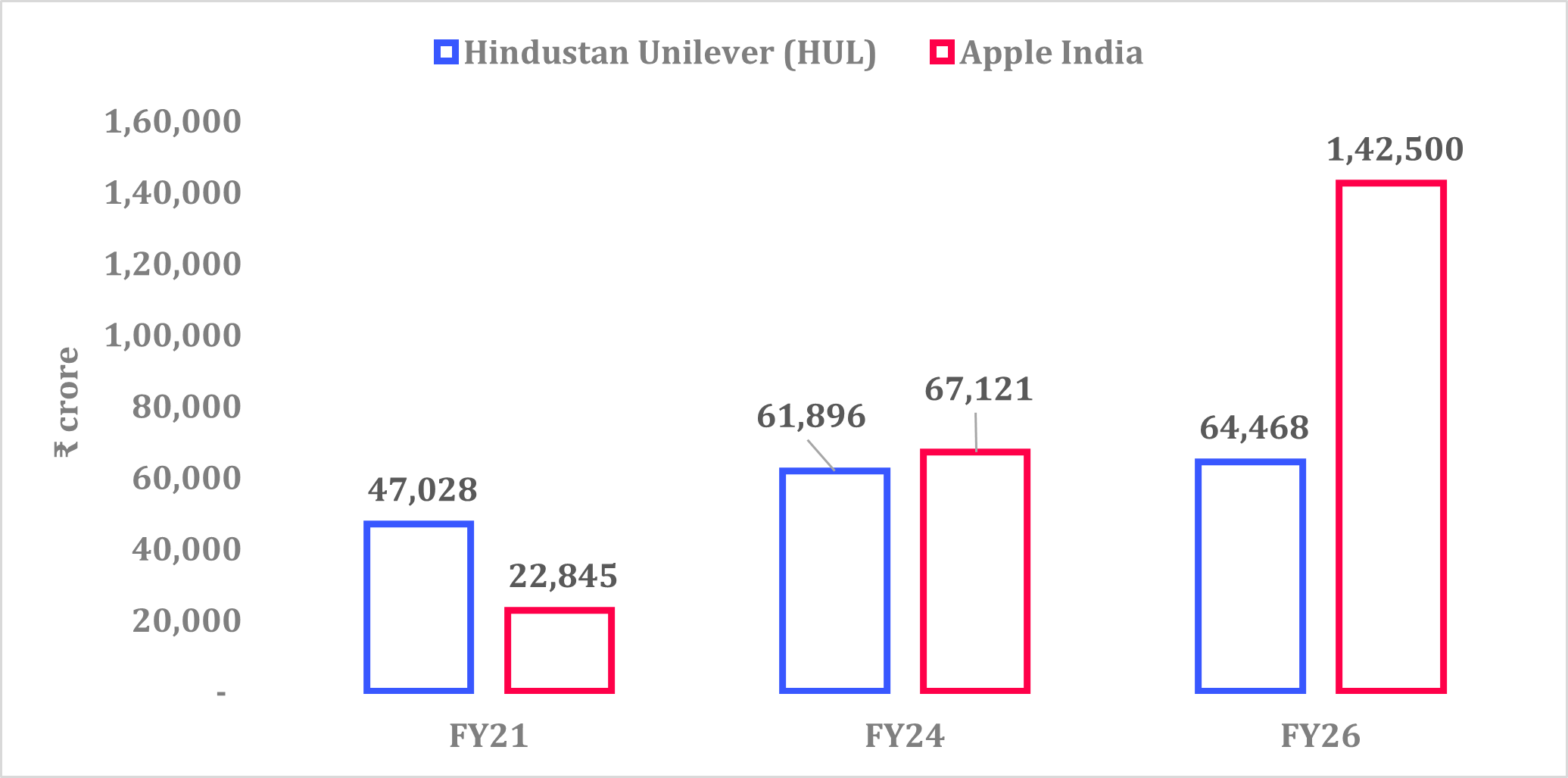
Source: Company filings,/Avendus Spark estimates. Apple India FY26 estimated | Details are as per the latest data available. Apple - Apple India Pvt. Ltd., HUL - Hindustan Unilever Ltd. Use of the company/ brand names does not imply any affiliation with or endorsement by them or any of its holding companies, subsidiaries or affiliates and are used for illustrative purpose only. The stocks/sectors mentioned do not constitute any kind of recommendation and are for information purpose only. Kotak Mahindra Mutual Fund may or may not hold position in the mentioned stock(s)/sector(s). Past performance may or may not be sustained in future.
At the same time:
- Total smartphone volumes are flat
- But premium share is rising sharply
Consumers are upgrading, not increasing units.
Same number of phones. Very different wallets.
India is not just consuming more - it is consuming better.
Rent, EMI & Data: The New Fixed Costs
A rising share of the Indian household wallet is now being locked into essential, recurring commitments, reducing flexibility in discretionary spending.
Three categories illustrate this shift clearly:
- Urban rent has steadily climbed, with key micro-markets seeing 20–60% increases over the past 4–5 years (e.g., locations in Mumbai, Bengaluru, and NCR)
- Household EMI burdens have outpaced income growth in 5 out of the last 7 years, reflecting a growing dependence on credit to fund lifestyle upgrades
- Mobile data spending has risen at a ~15–16% CAGR, nearly 3× faster than rural wage growth (~5%) over the last 8 years
Source: TRAI; Labour Bureau Rural Daily Wage Series (men, blended). | MOSPI HCES (chart); Crib/Magic bricks/No Broker city data 2019→2024-25; ANAROCK. | Details are as per the latest data available. | data as of FY25
What is important is not just growth - but the nature of this spending:
- Rent → unavoidable and rising
- EMIs → contractually fixed
- Data → increasingly essential (work, payments, entertainment)
Paying For Experiences: The Weekend Economy
Consumption is shifting from products to moments. India is increasingly spending on experiences over ownership:
- Live events industry has scaled rapidly
- Concert demand far exceeds supply
- Tier 2 cities are now key growth drivers
Source: BookMyShow 2024-25 trends report; EY x BookMyShow; Outlook Business. | Details are as per the latest data available.
Experiences are becoming the new expression of wealth.
The Outward Wallet: Consumption Moving Beyond India
India’s consumption story is no longer confined within its borders. A growing share of household spending is now being directed outward — into global travel, assets, and experiences rather than domestic goods and services.
Growth In Outward Remittance (x Times)
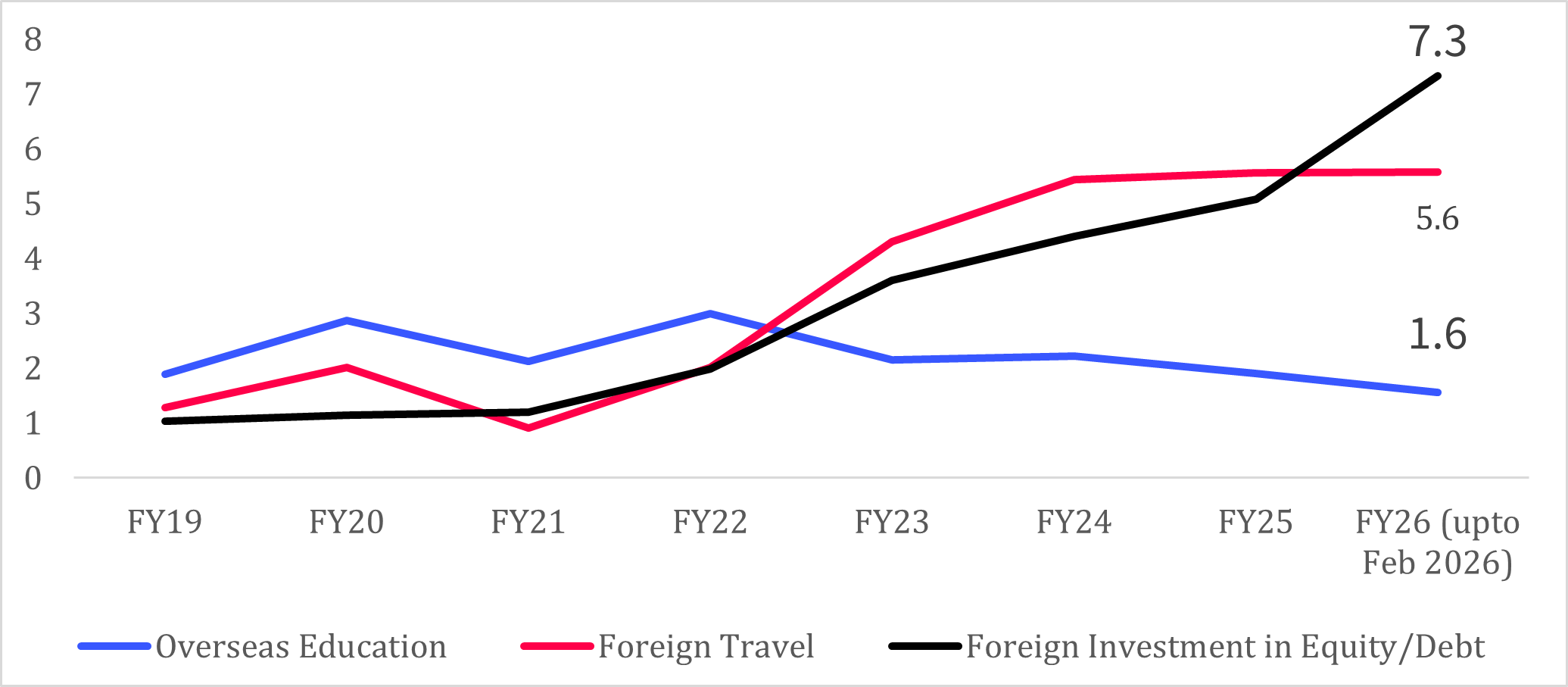
Source: RBI, India data hub | Details are as per the latest data available. | Data as of Feb FY26
Two trends highlight this shift:
- Foreign travel spending has surged sharply, reaching ~₹1.45 lakh crore annually which is ~ larger than the entire building materials industry (plywood, tiles, pipes, laminates).
- Overseas investments (equity and debt) have multiplied ~7× in the last 3 years, signalling rising global allocation of Indian savings
Source: RBI, India data hub | Details are as per the latest data available. | Data as on Feb FY26
| Earlier Preference | Emerging Preference |
|---|---|
| Domestic Goods | Global Experiences |
| Physical Assets | Financial/Global Exposure |
| Local Industries | International Ecosystems |
Unlike earlier phases of consumption growth - which directly fuelled domestic sectors like housing, infrastructure, and manufacturing - this outward shift represents a leakage of spending from the local economy.
Imbalance in the consumption cycle:
Demand is growing, but not all of it is benefiting domestic industries.
The Indian wallet is globalising faster than India’s production base is capturing it.
Income Growth: Deepening, Not Widening
One of the most critical and often overlooked shifts in India’s consumption story is not how fast income is growing, but who it is growing for.
Over the past few years, income expansion has been skewed toward the top end of the income pyramid:
- Urban affluent households have seen income grow at ~18% CAGR
- In contrast, the broader urban mass segment has grown at only ~6% CAGR
This divergence fundamentally reshapes consumption dynamics.
Growth In Aggregate Income Pool By Cohort - CAGR By Period (%)
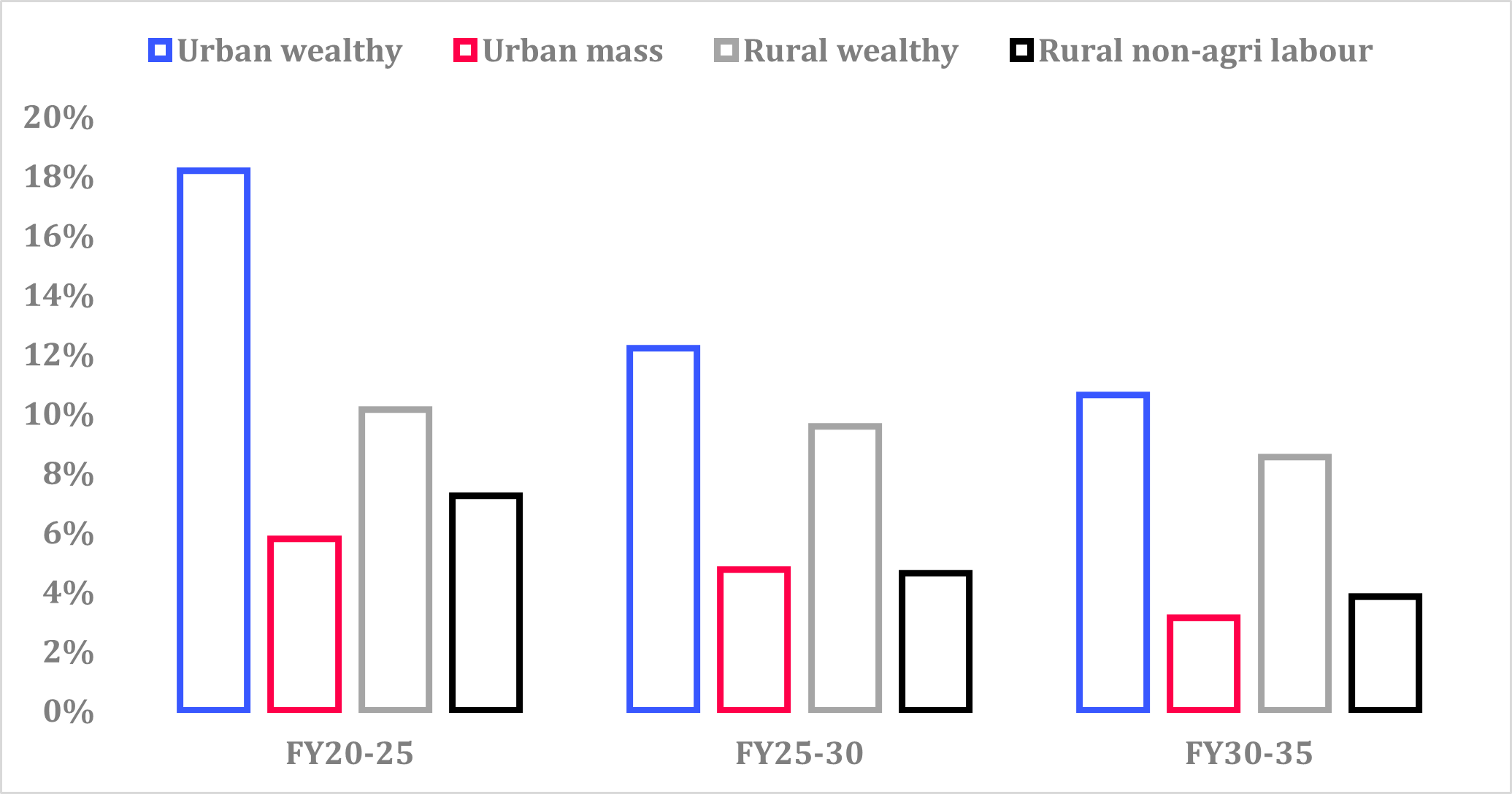
Source: NABARD, CLSA, Income Tax Portal, Details are as per the latest data available. | Data above FY26 to FY35 are estimates
The Tax Data Confirms the Same Story
A powerful way to see this concentration is through tax data:
- Tax filers have grown ~2.5× over time
- But the number of actual taxpayers (those paying tax) has increased only marginally. More people are filing income tax returns, but very few are contributing meaningfully to tax revenues.
Source: Income Tax Department; UBS analysis. Data as on FY24-25. | Details are as per the latest data available.
The same affluent cohort is effectively funding both:
- Government revenues (through taxes)
- Discretionary consumption growth (through spending).
Growth is happening within the same cohort, not across new cohorts.
Same India. Two very different consumption stories.
I. One India is upgrading, travelling, and consuming experiences
II. The other is managing rising fixed costs and slower income growth
Consumption is expanding — but its base is not.
The Leakages: Speculation & Fraud
One of the most underappreciated shifts in India’s consumption story isn’t where money is going — but where it is disappearing.
In recent years, large pools of household savings have been diverted into speculation and fraud, quietly draining what could have otherwise fuelled consumption and investment.
- ₹2.87 lakh crore has been lost by retail traders in F&O over a short period which alone could have bought ~35–36 crore washing machines — almost one for every household in India.
- ₹41,000+ crore has been wiped out in fraud and scam-related activities in just a few years
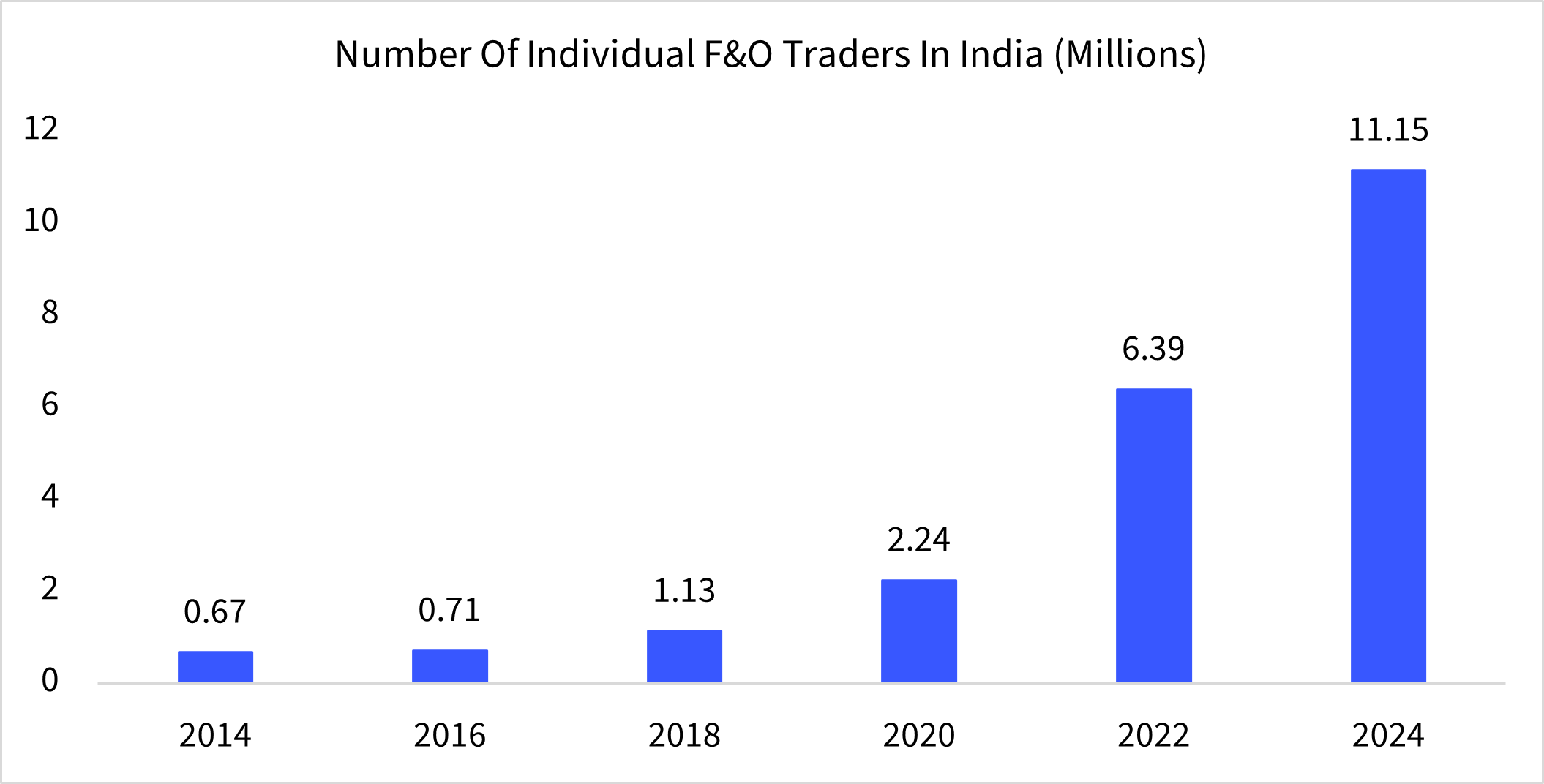
A portion of India’s consumption potential is not being deferred — it is being destroyed.
At a time when consumption growth is already becoming narrow and top-heavy, these leakages further weaken the system by reducing the pool of spendable household surplus.
Money isn’t just shifting - part of it is vanishing from the real economy.
Conclusion: A Story of Shift, Not Just Growth
India’s consumption story today is not as simple as it looks on the surface.
There is more spending, more choice, and more variety than ever before — but the story underneath is far more complex.
The wallet is being pulled in multiple directions:
- some of it chasing aspiration,
- some of it locked into obligation,
- and some of it quietly slipping away.
India isn’t just consuming more - it is rewriting the rules of its own consumption story
Disclaimer
KMAMC is not guaranteeing/offering/communicating any indicative yield/returns on investments. The stocks/sectors mentioned in this slide do not constitute any recommendation and Kotak Mahindra Mutual Fund may or may not have any future position in these sectors/stocks. Usage of brand names/ company names in generic content/non-scheme related content - Use of the company/ brand names does not imply any affiliation with or endorsement by them or any of its holding companies, subsidiaries or affiliates and are used for illustrative purpose only.
Mutual Fund investments are subject to market risks, read all scheme related documents carefully.